The Five Ships: The Trinidad, San Antonio, Concepcion, Victoria, and Santiago
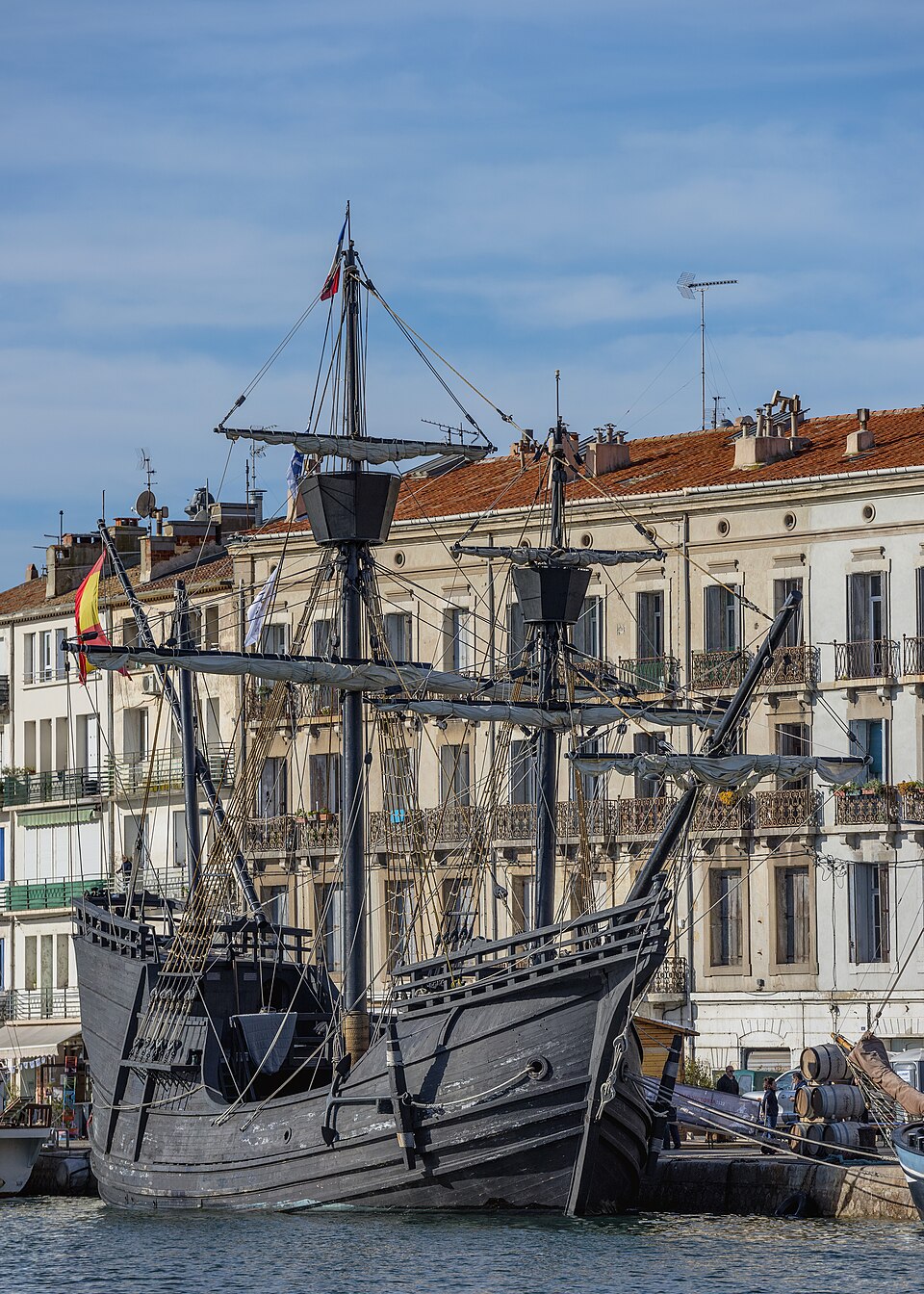
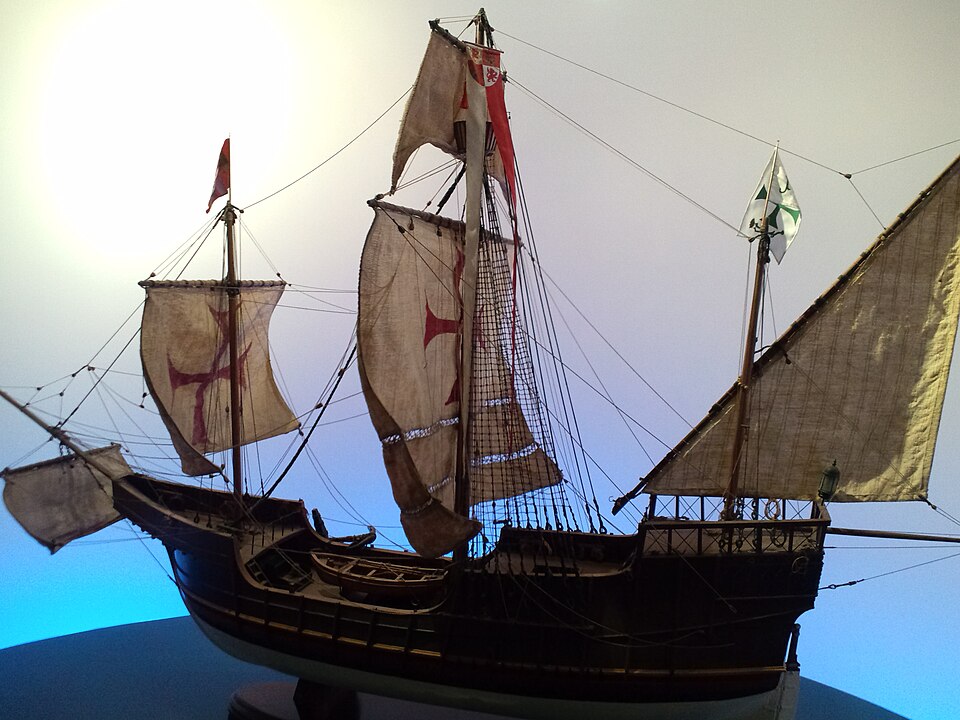
The fleet that sailed around the world was not impressive to look at. Five small, old wooden ships, the largest barely thirty metres long, carrying about 270 men, two years of food, and no charts of where they were going. Only one of the five would come home. The others were wrecked, deserted, burned, or captured. But the five ships were well chosen for the job: a roomy flagship, three sturdy companions, and a small fast scout. Their names — Trinidad, San Antonio, Concepcion, Victoria, Santiago — are among the most famous in the history of the sea.
In short
The fleet was five ships: the Trinidad (flagship, about 110 tons, commanded by Magellan himself), the San Antonio (about 120 tons, Juan de Cartagena), the Concepcion (about 90 tons, Gaspar de Quesada), the Victoria (about 85 tons, Luis de Mendoza), and the Santiago (about 75 tons, Joao Serrao). About 270 men sailed in all, from at least nine countries. Only the Victoria completed the circumnavigation. The Santiago was wrecked in 1520, the San Antonio deserted and sailed home, the Concepcion was burned in the Philippines in 1521, and the Trinidad was captured by the Portuguese in the Moluccas.
The flagship: Trinidad
The Trinidad was the fleet's flagship and Magellan's own ship. She was a nao — a carrack-type merchant vessel — of about 110 tons, with a high sterncastle and forecastle, square sails, and a crew of about 55 men. She was already about ten years old when the fleet sailed, and she was not fast, but she was roomy, and she carried the expedition's stores and Magellan's cabin. Magellan chose her because she was the best of the five for a long voyage, and because a flagship needed to be seen: she carried the captain-general's flag, and the other ships followed her. Her end came in the Spice Islands. After the Victoria sailed for Spain in December 1521, the Trinidad tried to return east across the Pacific, was driven back by storms, and was captured by the Portuguese at Ternate in 1522. Of her crew, only four or five men ever reached Spain again, years later, after imprisonment and hard labour in the East Indies.
San Antonio: the biggest ship, and the deserter
The San Antonio was the largest ship in the fleet, at about 120 tons, and she carried the fleet's main store of food. Her captain was Juan de Cartagena, the Spanish nobleman who was also the fleet's inspector — the man charged with reporting on Magellan to the king. Cartagena resented Magellan from the start, and in the mutiny at Port St Julian he was one of the ringleaders. After the mutiny was crushed, Magellan marooned him on the Patagonian coast with a priest. The San Antonio's story did not end there. In the Strait of Magellan, under her new captain, Estevao Gomes, she turned back in the night, slipped away from the fleet, and sailed for Spain, arriving in Seville in May 1521 with fifty-five men. Gomes told the Spanish authorities that Magellan had been killed in a mutiny and that the expedition was lost — a lie that disgraced Magellan's name in Spain until the Victoria came home a year later and told the truth.
Concepcion and Victoria: the middle ships
The Concepcion, at about 90 tons, was captained by Gaspar de Quesada, another of the mutineers at Port St Julian. Quesada was executed for his part in the mutiny, and the Concepcion went on under a new captain, Juan Sebastian Elcano — the Basque officer who would later bring the Victoria home. The Concepcion sailed through the strait and across the Pacific, and reached the Philippines, but by May 1521, after Magellan's death and the loss of so many men, there were not enough sailors left to crew three ships. The survivors burned her at Bohol on 2 May 1521, and divided her crew between the Trinidad and the Victoria. The Victoria, at about 85 tons, was captained by Luis de Mendoza, who was killed during the mutiny at Port St Julian. She was the smallest of the large ships, and the one nobody expected to matter most. Under Elcano she became the only ship in history to sail all the way around the world, and the only one of the five to see Spain again.
Santiago: the scout
The Santiago was the smallest ship in the fleet, at about 75 tons, and the fastest. Her captain was Joao Serrao, a Portuguese, and her job was to scout ahead of the fleet, sounding the coast and looking for the strait. In May 1520, while the fleet was wintering at Port St Julian, the Santiago was sent south to explore, and was wrecked in a storm on the Patagonian coast. Her crew survived — all but one man — and walked back to Port St Julian through the winter, arriving half-starved. The loss of the Santiago was a blow: the fleet had lost its scout before it had even found the strait. But the wreck also proved something important. The men who walked back had seen the coast to the south, and they reported that it went on and on, with no strait in sight. Magellan pressed on anyway, south along a coast that seemed endless, until, in October 1520, he found the passage he had been looking for.
The men aboard
About 270 men sailed in the fleet — sources give figures from 237 to 270, and this site says "about 270" because the exact number is not certain. They came from at least nine countries: Spaniards, Portuguese, Italians, Frenchmen, Germans, Greeks, Flemings, and others. The most famous of them was Antonio Pigafetta, a young Venetian nobleman who had come to Spain with the papal ambassador and talked his way onto the expedition as Magellan's assistant. Pigafetta kept a journal of the whole voyage — the only full first-hand account that survives — and without it we would know far less about what happened. There was also a priest, a surgeon, a notary, and a number of servants and boys. The crews were a mixture of experienced sailors and men who had never been to sea, and they spoke so many languages that orders had to be given in Spanish, Portuguese, and Italian at once. It was a fleet held together by pay, by discipline, and by a commander who trusted almost none of his officers — and it was about to face the hardest voyage anyone had ever attempted.
| Ship | Type and size | Captain | Fate |
|---|---|---|---|
| Trinidad | Nao, ~110 tons (flagship) | Magellan | Captured by Portuguese at Ternate, 1522 |
| San Antonio | Nao, ~120 tons | Juan de Cartagena | Deserted in the strait; returned to Spain, May 1521 |
| Concepcion | Caravel, ~90 tons | Gaspar de Quesada | Burned at Bohol, Philippines, 2 May 1521 |
| Victoria | Caravel, ~85 tons | Luis de Mendoza, then Elcano | Only ship to complete the circumnavigation |
| Santiago | Caravel, ~75 tons | Joao Serrao | Wrecked on the Patagonian coast, May 1520 |
Sources: Wikipedia, “Magellan expedition”; Encyclopaedia Britannica, “Ferdinand Magellan”; Ohio State University Origins, “Magellan’s Circumnavigation of the Earth”; Museo Naval, Madrid, “Magellan, Elcano and Their Voyage Around the World.” Checked 29 November 2026.