The Spanish Bargain: A Portuguese Captain Sells His Plan to Spain
In the autumn of 1517, a lame Portuguese sailor arrived in Seville with a plan that his own king had rejected. Within eighteen months he had the backing of the most powerful monarch in Europe, a fleet of five ships, and a contract that made him captain-general of an expedition to the other side of the world. The bargain Magellan struck with Spain was generous — titles, a share of the profits, and the governorship of any lands he found — and it was also dangerous. He was a foreigner commanding Spanish captains, and many of them resented him from the first day. The voyage would be shaped by that resentment as much as by wind and weather.
In short
Magellan and Rui Faleiro presented their plan to King Charles I of Spain in early 1518. On 22 March 1518, at Valladolid, the king signed a capitulation (contract) naming them captains-general of an expedition to find a western route to the Spice Islands. The crown would pay for five ships and supplies; Magellan and Faleiro would receive a twentieth of the profits and the governorship of any lands discovered. Faleiro was later removed for ill health, leaving Magellan in sole command. The fleet was fitted out in Seville, and the total cost was about eight million maravedis — a large sum, but small beside the value of a single cargo of cloves.
Seville: the city that made the voyage possible
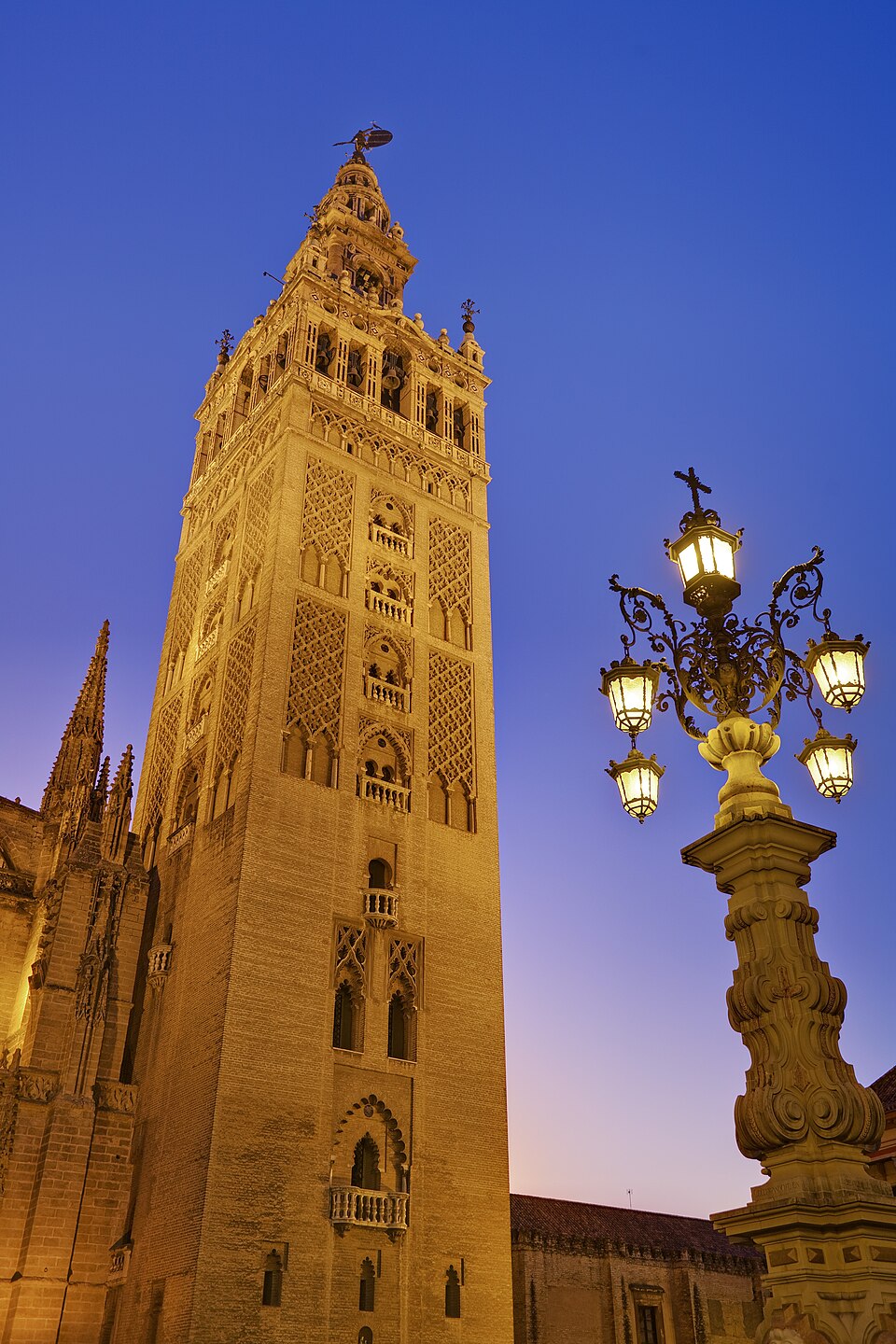
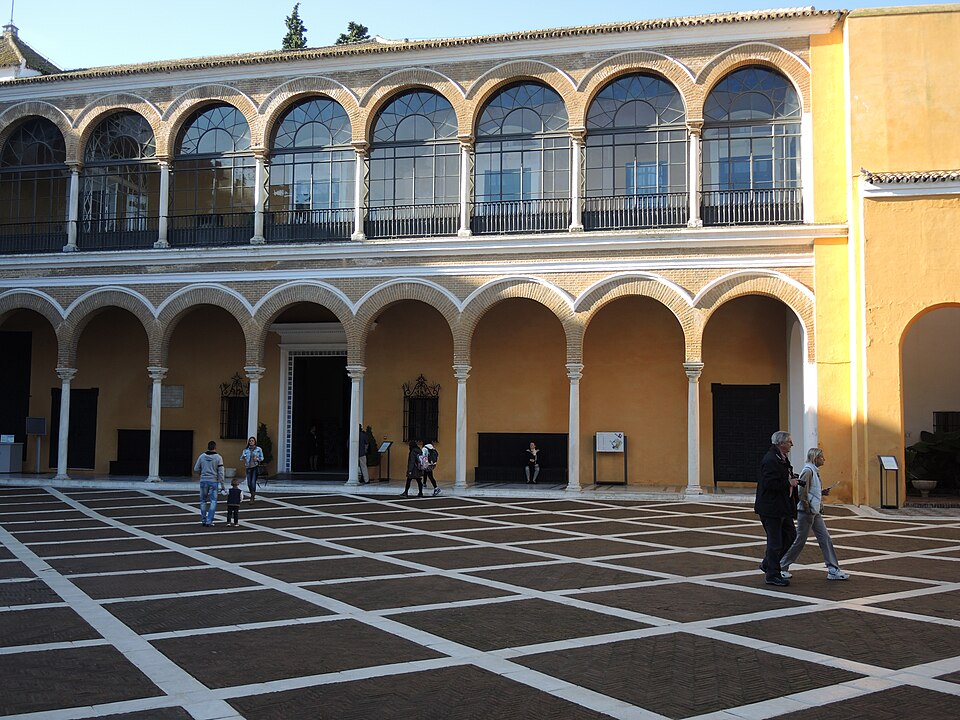
Seville, in 1518, was the centre of Spain's overseas world. The Casa de Contratacion — the House of Trade — controlled all commerce with the Indies from its offices in the city, and the Guadalquivir river carried ships down to the sea at Sanlucar de Barrameda. Magellan settled there, married Beatriz Barbosa, the daughter of a Portuguese family long settled in the city, and began to work his connections. He found a powerful ally in Juan de Aranda, a factor of the Casa de Contratacion, who introduced him at court. He also found Rui Faleiro, a fellow Portuguese exile with the astronomical knowledge Magellan lacked. Together they prepared a presentation for the king: charts, globes, and a written proposal arguing that the Spice Islands lay in Spain's half of the world and could be reached by sailing west.
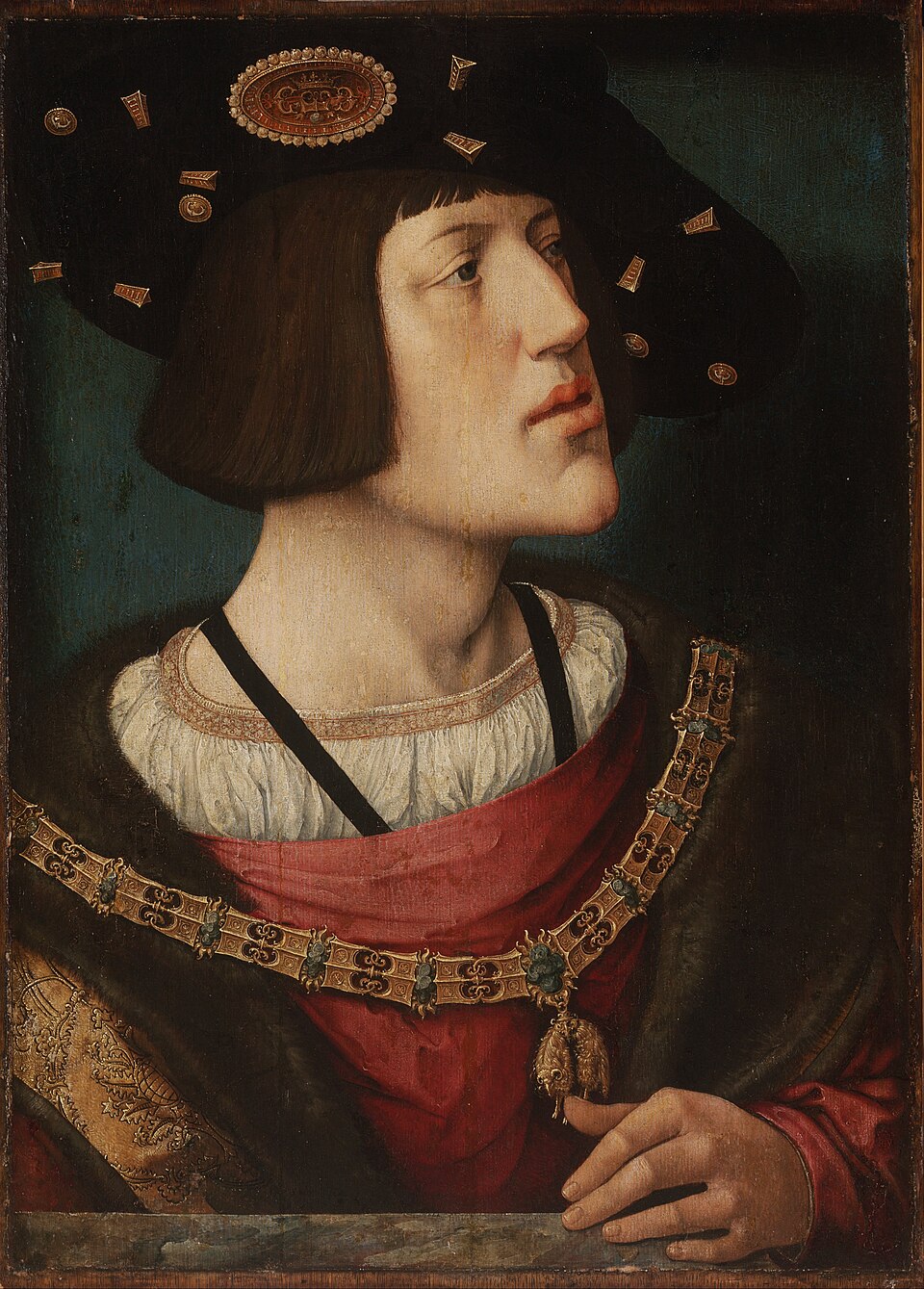
The timing was good. Charles I was only eighteen, newly arrived in Spain from the Netherlands, and eager to make his mark. His advisers were divided — some warned that the plan would provoke Portugal, with which Spain had a treaty — but the king was persuaded, and his chief minister, Cardinal Adrian of Utrecht, supported the expedition. On 22 March 1518 the capitulation was signed at Valladolid. It was a remarkable document: it gave Magellan and Faleiro the titles of captains-general, a twentieth share of all profits from the voyage, the right to govern any islands they discovered, and a monopoly on the western route for ten years. It also made them, in effect, partners of the crown rather than its employees — a generosity that would later cause trouble, just as the Capitulations of Santa Fe had done for Columbus.
Portugal tries to stop him
King Manuel I of Portugal was furious. He had refused Magellan's requests, and now his former subject was offering Spain the route to the Spice Islands that Portugal had spent twenty years protecting. Portuguese agents in Seville tried to sabotage the preparations: they spread rumours that the ships were unseaworthy, tried to bribe Magellan's captains, and, according to some accounts, plotted to kill him. Manuel sent a letter to Charles demanding that Magellan be handed back, and Portuguese officials warned that the expedition would violate the Treaty of Tordesillas. Charles refused. The expedition went ahead — but the hostility left its mark. Magellan knew that Portugal would treat his fleet as pirates if it caught them in the Indian Ocean, and he knew that some of his own captains had been approached by Portuguese agents. He trusted almost no one, and he kept his plans secret even from his officers. That secrecy would save the voyage more than once — and it would also help to cause a mutiny.
Spanish captains, Portuguese commander
The fleet's officers were a problem from the start. The king had insisted that most of the captains be Spanish, and Magellan, a Portuguese, was placed over them. His second-in-command was Juan de Cartagena, a Spanish nobleman appointed as the fleet's inspector (veedor) with orders to report on Magellan to the king — a man whose loyalty was to the crown, not to his commander. The other captains were Luis de Mendoza of the Victoria, Gaspar de Quesada of the Concepcion, and Joao Serrao, a Portuguese, of the Santiago. Only one of the five captains was a man Magellan had chosen himself. The crews were a mixture too: Spaniards, Portuguese, Italians, Frenchmen, Germans, Greeks, and men from at least nine countries in all, speaking a dozen languages, with no common loyalty except their pay. It was a fleet held together by a contract and a commander most of its officers resented — and it was about to sail to the other side of the world.
Fitting out the fleet
The five ships were bought and refitted in Seville during 1518 and 1519, and the work was slow, expensive, and full of arguments. The ships were old — the Trinidad, the flagship, was already ten years old — and they needed new rigging, new caulking, and new guns. Supplies were loaded for two years: biscuit, salted meat, cheese, beans, wine, and water, along with trade goods for the Spice Islands — cloth, mirrors, knives, and beads — and weapons for the men. The total cost came to about eight million maravedis, paid by the crown and by a group of Seville merchants led by Cristobal de Haro, who put up part of the money in return for a share of the profits. By the summer of 1519 the fleet was ready, and the crews were assembled. On 10 August 1519 the five ships sailed down the Guadalquivir from Seville, and on 20 September they left Sanlucar de Barrameda and turned west into the Atlantic. Magellan, who had been refused by one king and trusted by another, was finally at sea.
| Date | What happened |
|---|---|
| Oct 1517 | Magellan arrives in Seville and begins to seek Spanish backing |
| Early 1518 | Magellan and Faleiro present their plan to King Charles I |
| 22 Mar 1518 | Capitulation of Valladolid: Magellan and Faleiro named captains-general |
| 1518–19 | Faleiro removed for ill health; Magellan takes sole command |
| 1518–19 | Five ships fitted out in Seville at a cost of about 8 million maravedis |
| 10 Aug 1519 | Fleet sails from Seville down the Guadalquivir |
| 20 Sep 1519 | Fleet leaves Sanlucar de Barrameda for the Atlantic |
Sources: Encyclopaedia Britannica, “Ferdinand Magellan”; Wikipedia, “Magellan expedition” and “Ferdinand Magellan”; Ohio State University Origins, “Magellan’s Circumnavigation of the Earth”; Museo Naval, Madrid, “Magellan, Elcano and Their Voyage Around the World.” Checked 29 November 2026.