The Philippines and Mactan: Welcome in Cebu, Death on Mactan
On 16 March 1521, after ninety-eight days at sea, the fleet reached the Philippines — and for a few weeks, everything went well. The people of Cebu welcomed the strangers, hundreds were baptised, and Magellan believed he had found a new ally for Spain. Then he made a mistake that cost him his life. He agreed to fight a local chief who refused to submit, and on 27 April 1521 he led forty-nine men ashore on the island of Mactan against more than a thousand warriors. Magellan was killed on the beach, and his body was never recovered. The voyage that had survived the Atlantic, the strait, and the Pacific was suddenly without its commander.
In short
The fleet reached the Philippines on 16 March 1521 (Samar, then Homonhon). At Cebu, Raja Humabon welcomed Magellan, and on 14 April 1521 Humabon and about 800 of his people were baptised as Christians. Magellan then demanded that the neighbouring chief Lapu-Lapu of Mactan submit to Humabon and to Spain. Lapu-Lapu refused. On 27 April 1521 Magellan led 49 men ashore on Mactan against more than 1,000 warriors, and was killed in the fighting, along with 8 of his men. His body was kept by the Mactan people and never recovered. Four days later, on 1 May, Humabon turned on the expedition and killed about 27 more men, including the new commanders Barbosa and Serrao, at a banquet in Cebu.
Arrival in the Philippines
The fleet's first landfall in the Philippines was the island of Homonhon, off Samar, on 16 March 1521. The men were weak and starving, and the local people brought them food — coconuts, rice, and fish — and traded with them. A few days later the fleet moved on to the island of Limasawa, where Magellan met a local chief, Raja Kolambu, who spoke some Malay and could act as an interpreter. Kolambu guided the fleet to Cebu, the largest and richest island in the area, where the chief, Raja Humabon, received them with ceremony. The two sides exchanged gifts, and Magellan promised Humabon the protection of the king of Spain. On 14 April 1521, Humabon, his wife, and about eight hundred of his people were baptised as Christians, in a ceremony conducted by the fleet's priest. Magellan believed he had done what Columbus had dreamed of doing: he had brought a new land and its people into the Spanish world, without a battle.
It was a triumph, but it was built on a misunderstanding. Humabon had not submitted to Spain; he had made an alliance with a powerful stranger, and he expected Magellan to help him against his rivals. The most important of those rivals was Lapu-Lapu, the chief of the neighbouring island of Mactan, who refused to recognise Humabon's authority or to pay tribute to Spain. Humabon asked Magellan to deal with him, and Magellan agreed. It was the worst decision of the voyage. Magellan had no business fighting a local war, and he had no idea how many warriors Lapu-Lapu could put into the field. He also made a tactical error: he refused Humabon's offer of help, insisting that the Spaniards would fight alone, to show the power of Spanish arms. He landed on Mactan with forty-nine men, in water too shallow for his ships' guns to reach the shore, and walked into a trap.
The Battle of Mactan
The battle took place on the morning of 27 April 1521. Magellan's men waded ashore through shallow water, their armour heavy, their muskets and crossbows of little use against warriors who knew the ground. Lapu-Lapu's men — more than a thousand of them, by Pigafetta's account — attacked with spears, arrows, and stones, keeping their distance and aiming at the Spaniards' legs, which were unprotected by armour. The Spaniards fired their guns, but the powder was damp, and the crossbows were slow to reload. Magellan was wounded in the leg by a poisoned arrow, and then, as he tried to rally his men, he was struck down and killed. Eight of his men died with him; the rest fled to the boats. Pigafetta, who watched from the ships, wrote that Magellan died fighting, covering the retreat of his men, and that his body was left on the beach. The people of Mactan kept it, and refused to give it back, even when the fleet offered a ransom. Magellan's body was never recovered, and he has no grave.
The massacre at Cebu
Magellan's death left the expedition without a commander, and the men chose Duarte Barbosa and Joao Serrao to lead it. But the alliance with Humabon was already falling apart. Four days after Mactan, on 1 May 1521, Humabon invited Barbosa, Serrao, and about thirty of their men to a banquet in Cebu — and had them killed. The exact reason is not certain: some accounts say Humabon had been told by a survivor of the fleet that the Spaniards planned to enslave him, others that he had simply decided the alliance was no longer worth the risk. Whatever the reason, the result was a disaster. About twenty-seven Europeans were killed at the banquet, including both new commanders, and the survivors fled to the ships. The fleet that had sailed into the Philippines with three ships and more than a hundred men now had two ships and barely enough sailors to crew them. On 2 May the survivors burned the Concepcion at Bohol, divided her crew between the Trinidad and the Victoria, and sailed on to the Spice Islands without a commander they trusted, without a guide, and without the man who had planned the whole voyage.
What Mactan means today
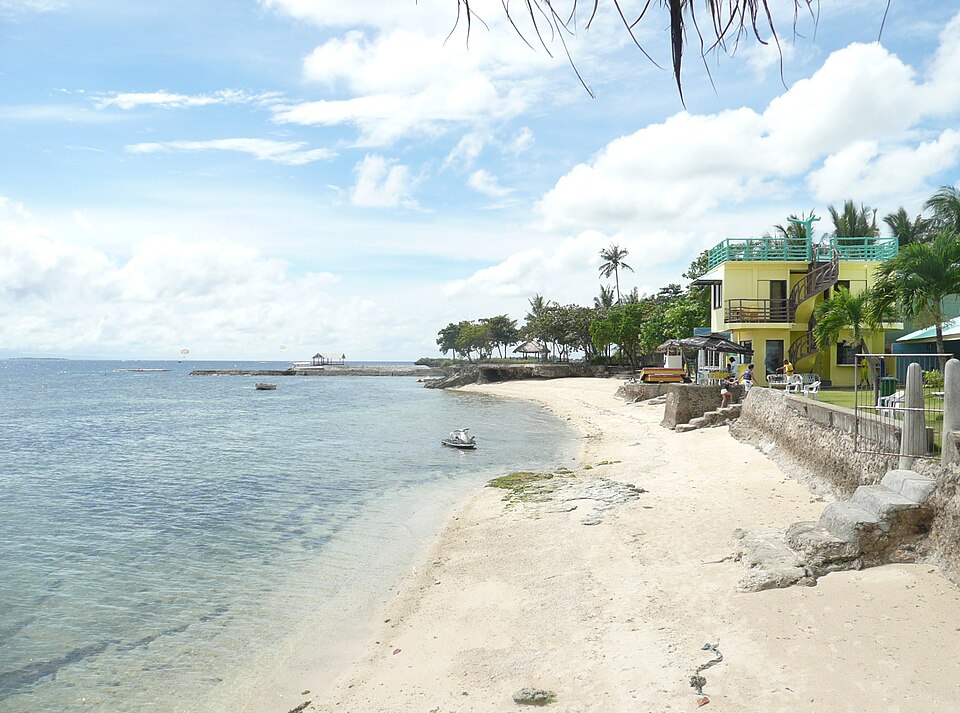
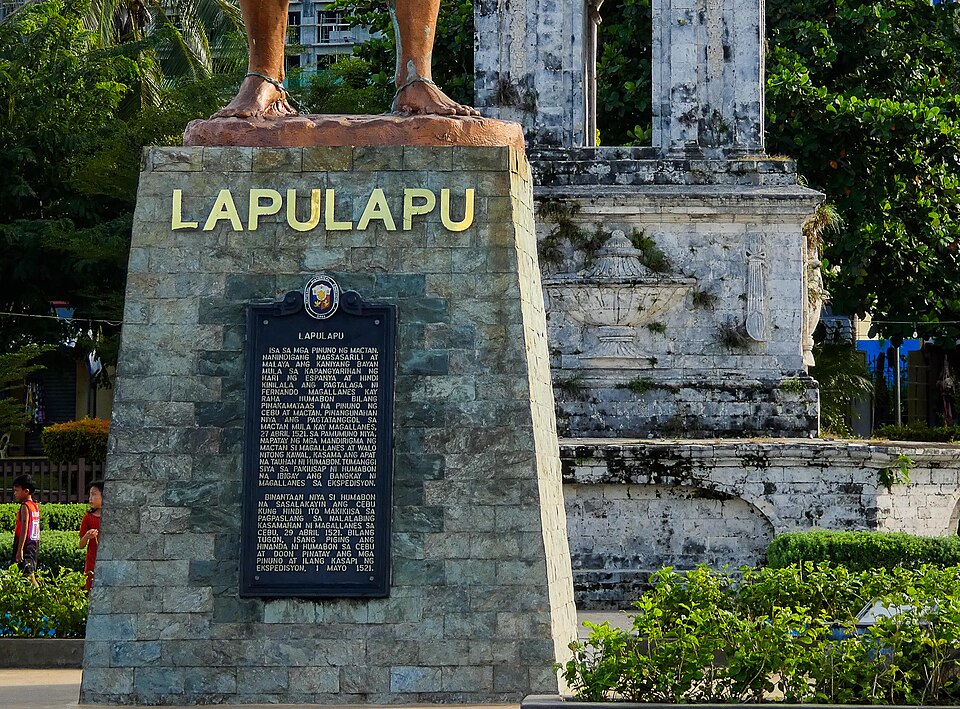
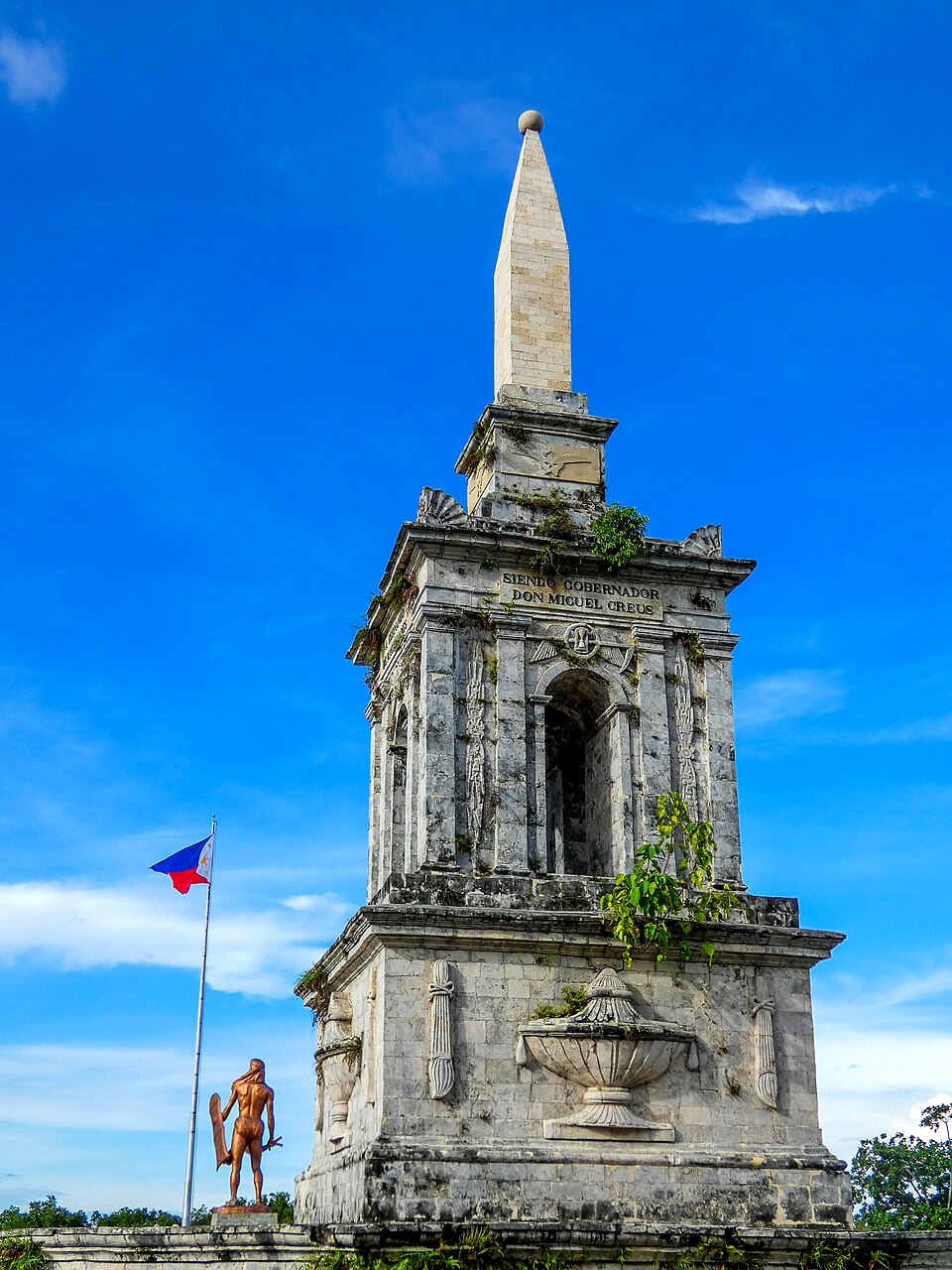
In the Philippines today, the Battle of Mactan is remembered very differently from the way it is remembered in Europe. In Europe, Magellan is the hero of the first circumnavigation. In the Philippines, Lapu-Lapu is the hero — the first Filipino to resist foreign invasion — and there is a large statue of him on Mactan Island, near the shrine that marks the place where Magellan fell. Lapu-Lapu is on the Philippine one-peso coin, and his name is given to a city, a fish, and a national holiday. The two monuments stand a few hundred metres apart on the same beach: a shrine to the man who was killed, and a statue to the man who killed him. It is a fitting place to remember the voyage — not as a simple story of heroism, but as a meeting of two worlds that did not understand each other, and a battle that neither side had planned.
| Date | What happened |
|---|---|
| 16 Mar 1521 | Fleet reaches Homonhon, off Samar, in the Philippines |
| 28 Mar 1521 | First Mass in the Philippines celebrated on Limasawa |
| 7 Apr 1521 | Fleet arrives at Cebu; Raja Humabon welcomes them |
| 14 Apr 1521 | Humabon and about 800 people baptised as Christians |
| 27 Apr 1521 | Battle of Mactan: Magellan killed with 8 of his men |
| 1 May 1521 | Massacre at Cebu: Barbosa, Serrao, and about 25 others killed |
| 2 May 1521 | Concepcion burned at Bohol; crew divided between two ships |
Sources: Wikipedia, “Magellan expedition” and “Battle of Mactan”; Encyclopaedia Britannica, “Ferdinand Magellan” and “Lapu-Lapu”; Ohio State University Origins, “Magellan’s Circumnavigation of the Earth”; Antonio Pigafetta, “The First Voyage Round the World” (journal, 1522). Checked 29 November 2026.